The 50/30/20 rule for splitting your paycheck
What it is, how to calculate it with your income and what to do if the numbers don’t add up.
By the Fluvi team · Updated October 31, 2026
50/30/20 calculator
Enter what you take home each month (net income) and choose how to split it.
Needs · 50 %
$2,000
Rent, utilities, groceries, transportation, health and minimum payments.
Wants · 30 %
$1,200
Going out, takeout, clothes, subscriptions and trips.
Savings and debt · 20 %
$800
Emergency fund, goals and extra payments on your debts.
Where does the rule come from?
It was popularized by Elizabeth Warren and her daughter Amelia Warren Tyagi in the book All Your Worth (2005). Its appeal is simplicity: instead of tracking every dollar, you watch just three groups. It’s a starting point, not a law.
Use your take-home pay
Work with what actually lands in your account, not your gross salary: after income tax, social security and other payroll deductions. If you’re self-employed or your income varies, take the average of the last six months and subtract the taxes you set aside.
What goes in each group
- Needs (50%), what you have to pay no matter what: rent or mortgage, utilities, groceries, transportation, health insurance, basic phone and internet, childcare and the minimum payments on your debts.
- Wants (30%), what makes life better but could be cut: restaurants and takeout, going out, clothes you don’t need, streaming, trips and hobbies.
- Savings and debt (20%): emergency fund, savings goals, retirement, investing and extra payments on your debts.
| Take-home pay | Needs 50% | Wants 30% | Savings 20% |
|---|---|---|---|
| $2,500 | $1,250 | $750 | $500 |
| $4,000 | $2,000 | $1,200 | $800 |
| $6,000 | $3,000 | $1,800 | $1,200 |
What if my paycheck doesn’t stretch?
That’s very common: in many cities rent alone takes 35 or 40% of take-home pay. If your needs go over 50%, adjust the percentages instead of giving up: 60/30/10 or 70/20/10 work too, and you can try them in the calculator above.
What matters is that savings is a fixed amount you set aside the day you get paid, even a small one, and that you raise it when you can. And review your wants before your savings: that’s where money usually slips away without you noticing.
First, an emergency fund
Before investing, use your 20% to build a cushion of three to six months of needs. It’s what keeps a surprise (an illness, losing your job, a repair) from turning into debt. If it’s hard to start, the 52-week savings challenge is a good way in. To take the rule down to each expense, build your monthly budget.
Apply the rule with Fluvi
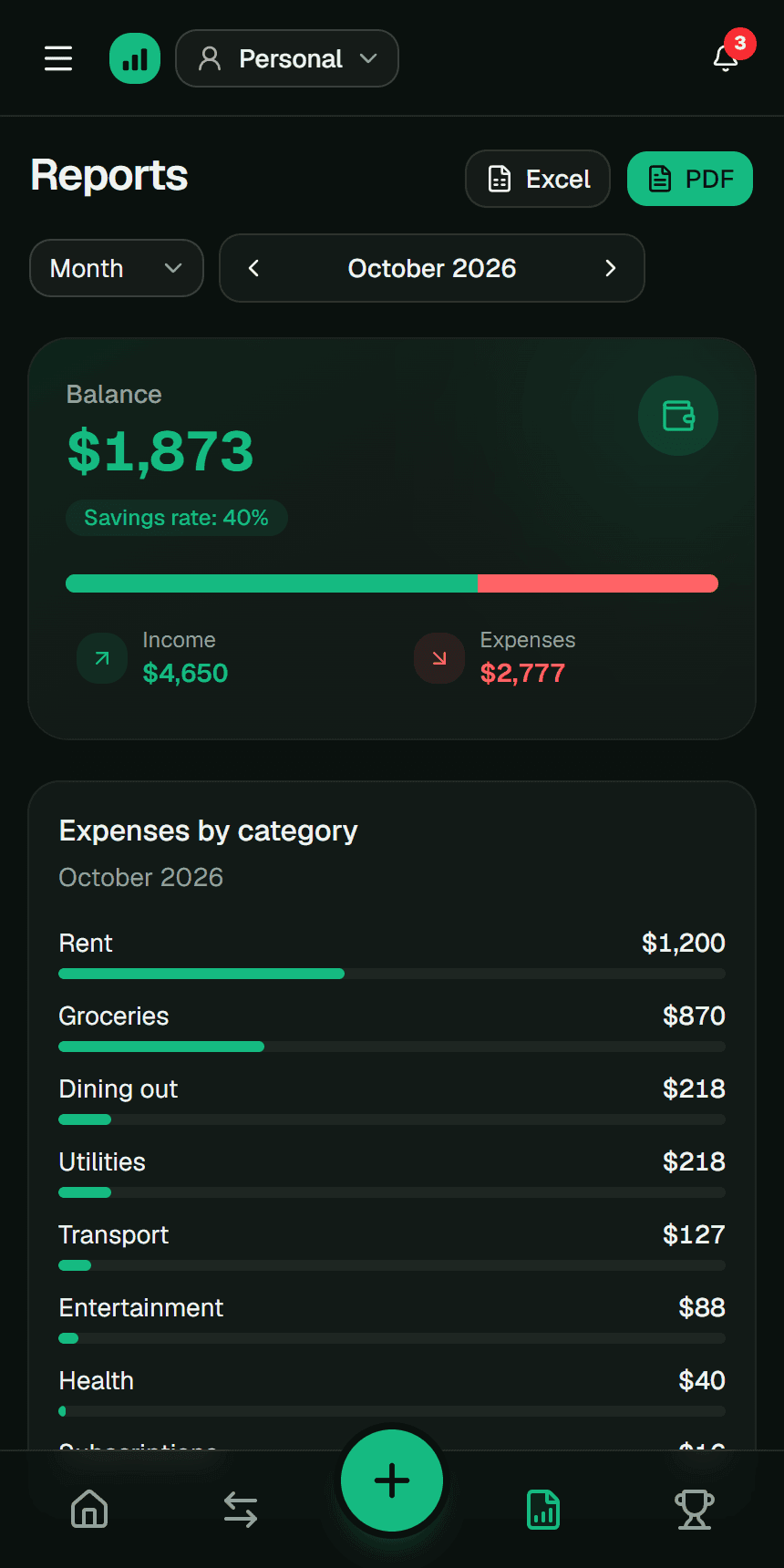
Log your income and expenses by category and Fluvi shows you in charts where your money goes, free and unlimited.
With Premium you set a limit for each category and get a heads-up when you’re close. For your 20%, create savings goals: the Free plan includes two.
Frequently asked questions
Do debts go in the 50 or the 20?
Minimum payments go in needs (50%). Anything extra you pay to get out of debt sooner goes in the 20%.
Does it work on a low income?
Yes, with adjusted percentages. On a low income needs often take more than 50%; start by saving a fixed 5 or 10% and raise it when you can.
What if my income changes every month?
Plan with a conservative income (a slow month) and send anything above it straight to savings.
Does it work for a couple or a family?
Yes: add up the household’s take-home pay and split it the same way. With Fluvi Premium you can share the same finances with a profile and permissions for each person.
Related guides
This guide is educational content, not personalized financial advice. The numbers are examples; adjust them to your situation. More details in the Terms and conditions (in Spanish).